What I’m Thinking About When I Paint: An Artist’s Inner Process
What I’m Actually Thinking About When I Paint
People sometimes ask me what I’m thinking about when I’m painting, as if there’s a clean answer hiding behind the brush. The truth is, most of the time my thoughts are messy, half-formed, and not especially poetic. Sometimes there aren’t even thoughts happening! Painting, for me, isn’t about executing a plan. It’s about listening closely enough to notice what keeps trying to surface.
I usually start with an generic idea and an intention, not an image. A feeling, a memory, a person’s presence lingering in my body. I might tell myself, this is a portrait or this is a landscape, but those labels loosen pretty quickly once the paint is moving. From there, my thoughts become quieter and more specific at the same time. I’m thinking about whether a color feels honest. Whether a shape feels like it’s breathing. Whether I’m pushing too hard, or not trusting myself enough.
A lot of what I’m thinking is physical. Is my arm tense? Am I rushing? Did I just make a mark because I was afraid of the silence on the canvas? When something isn’t working, my brain doesn’t say this is wrong so much as this feels closed off. When it is working, there’s a subtle sense of relief—like the painting just exhaled.
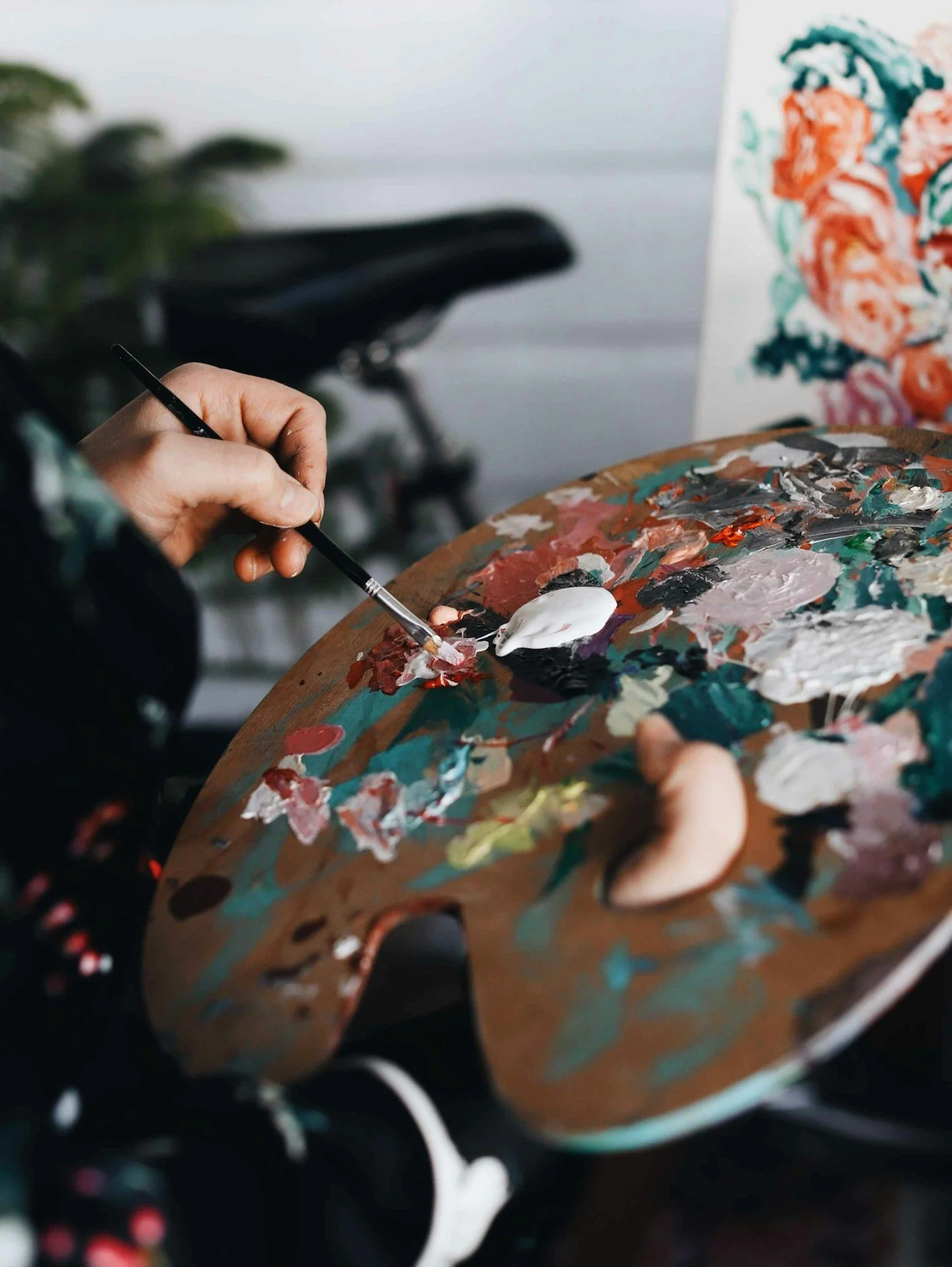
Color is where my thinking gets the most emotional. I’m rarely choosing colors because they’re “accurate.” I’m choosing them because they feel like memory. Nostalgia. Warmth. Tension. Sometimes a palette shows up fully formed, and sometimes I have to argue with it for a while. I’ll put something down, hate it, scrape it back, and then realize that discomfort was the point. I trust color before I trust explanation.
When I’m painting people, I’m thinking less about likeness and more about presence. What does it feel like to sit across from them? What’s gentle? What’s guarded? What feels loud even when it’s quiet? I don’t want the painting to say this is what they look like. I want it to say this is what it feels like to notice them.
I think about time a lot while I paint. Painting forces slowness. It asks for sustained attention in a world that rewards speed and polish. That slowness feels especially important to me when I’m painting queer subjects, moments, and communities that are so often treated as fleeting or disposable. Spending hours, days, weeks with a single piece feels like an act of care.
I think about other artists, too—not in a comparative way, but as quiet companions. I often return to Henri Matisse, who once said, “I don’t paint things. I only paint the difference between things.” That idea lives in my studio. It reminds me that what matters most is the space between, the tension, the relationships happening on the canvas.
I think about Joan Mitchell, who spoke about painting from remembered landscapes and remembered feelings. That resonates deeply with me. Even when I’m painting something directly in front of me, I’m also painting everything I carry with it—past versions of myself, music, places I’ve been, things I’m still grieving or learning to love.
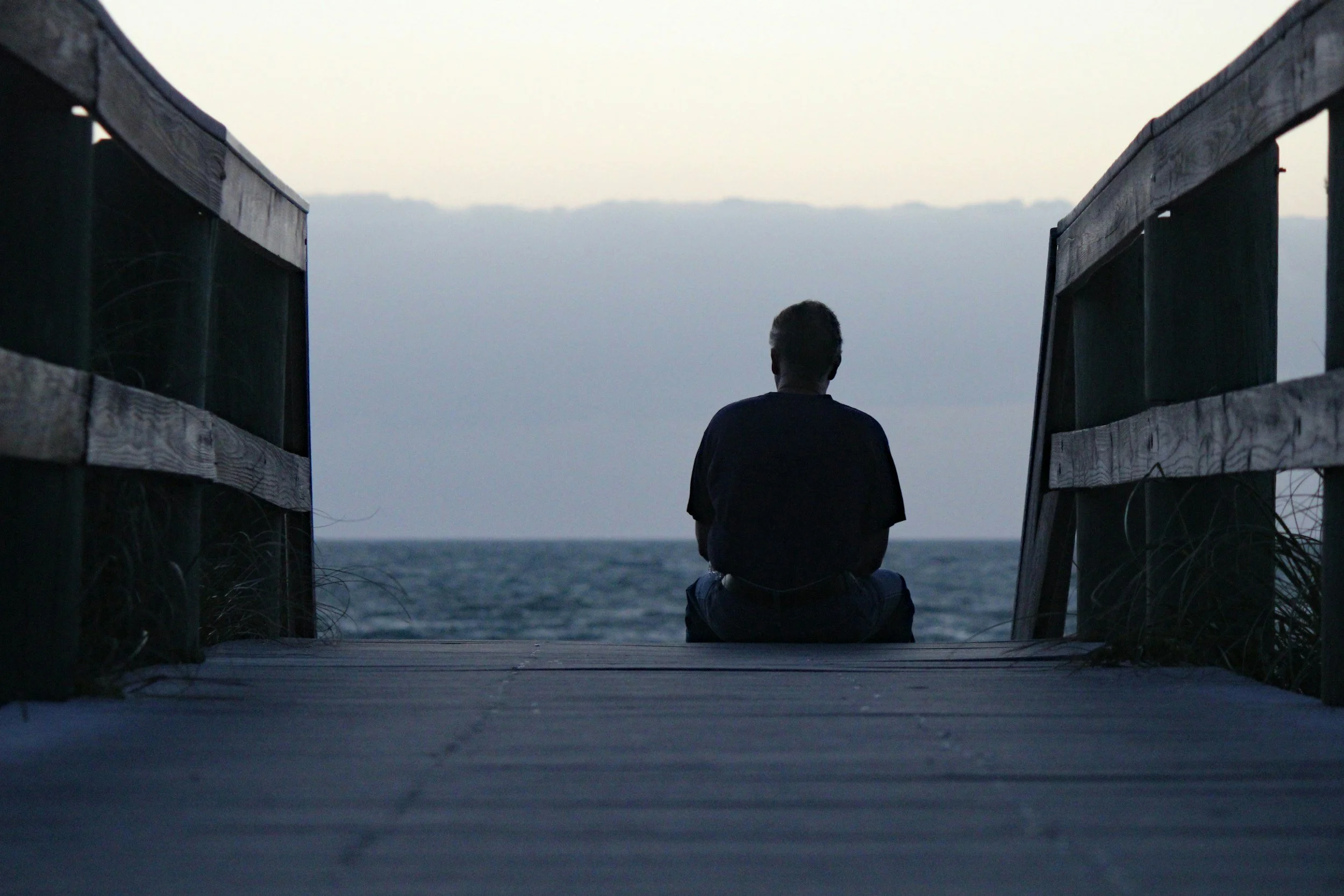
If I’m honest, I’m also thinking about doubt. About whether I’m allowed to take up this much space. About whether the painting will land. About whether I should already “know better” by now. But those thoughts don’t get to drive. They can sit in the room, but they don’t get the brush. It can be a struggle to stop those thoughts, but I am getting better at it. I think this is what stops artists from improving, which i have to remind myself often.
Mostly, when I paint, I’m practicing trust. Trust that if I stay long enough, something real will show itself. Trust that clarity doesn’t always come first. Trust that my job isn’t to control the painting, but to stay open to it and let it exist as it is supposed to. Perfection is the killer to success. I tell myself often that the perfect vision in my head and the imperfect outcome on the canvas are two versions of this ethereal art that I am creating, both of which can exist at the same time.
And when I stop painting for the day, I usually don’t feel finished. I feel listened out. Which, for me, is how I know I did the work.